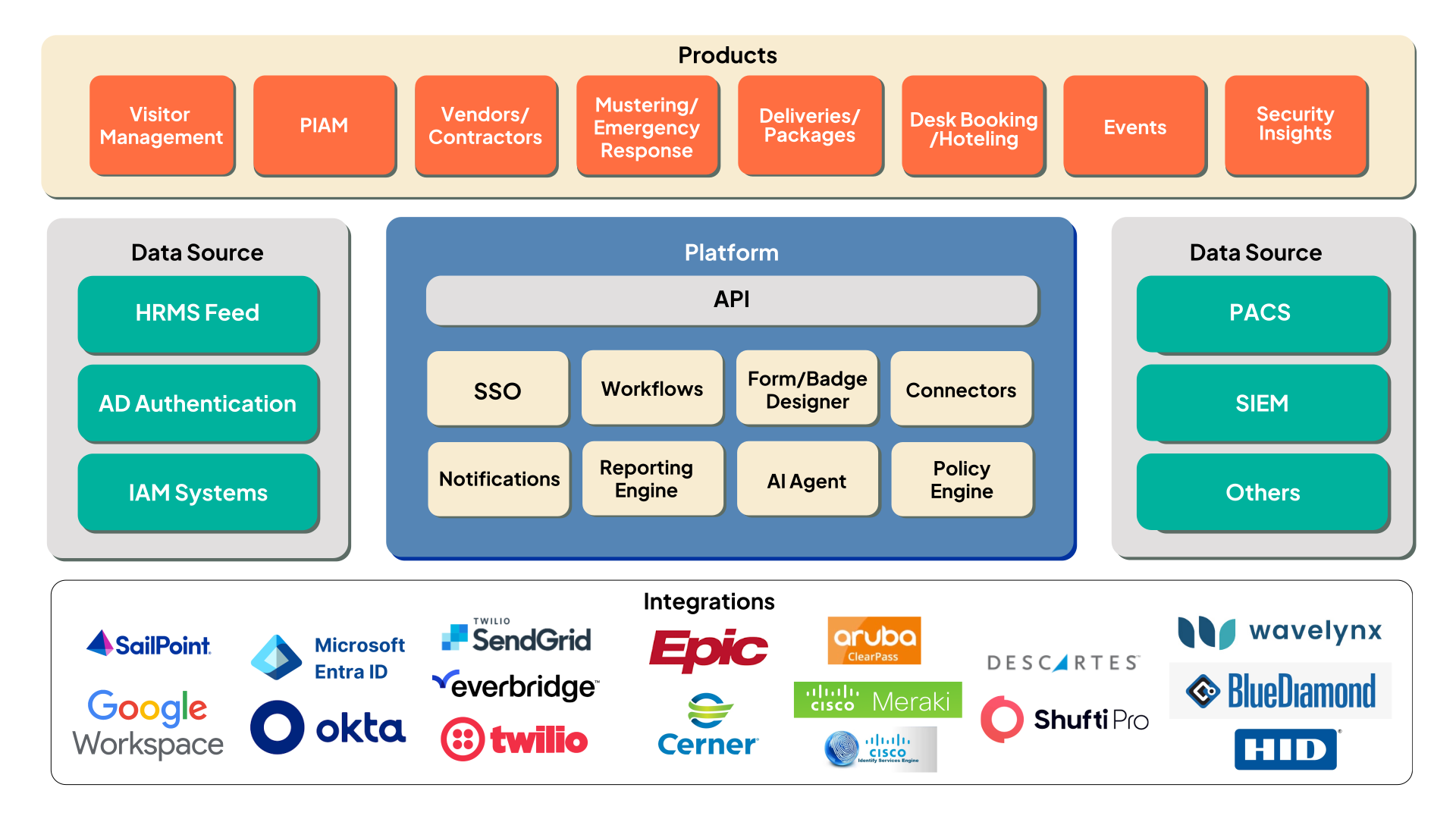
A Scalable and Secure Framework
A cloud-native, API-driven architecture enabling unified visitor, identity, and access control management across enterprise environments.
Narrative Escapism and Regret Culture: An Analysis of Gaki ni Modotte Yarinaoshi
The series taps into a universal anxiety—the "what if" of past decisions. Akira’s mission is not heroism but reparation . Every action is a reaction to a previous failure, making the narrative deeply introspective. This resonates powerfully with adult readers (typically ages 30–50) who face midlife reflection.
Gaki ni Modotte Yarinaoshi emerged in the late 2010s, a period when Japan was grappling with the "Lost Decades" (1991–2010) of economic stagnation. For readers who lived through the bubble era’s collapse, the idea of returning to 1989 with perfect knowledge is a potent fantasy of national redemption as well as personal.
🚀 It isn't just about winning; it's about the emotional closure of doing things "right" the second time around. Themes and Character Development
This counter-trend mocks the protagonist's delusion. The logic posits that if a person returned to their childhood with their current memories, they wouldn't necessarily become a millionaire genius. Instead:
A recurring motif is Akira’s inability to enjoy simple pleasures. While his "brat" peers play baseball or have crushes, Akira calculates net present value. The title phrase "gaki ni modotte" (going back to being a brat) is ironic—he physically returns to childhood but loses the spontaneity that makes childhood meaningful.
Enhancing security and access control across corporate, healthcare, education, government, and other sectors with an AI-powered visitor management solution for intelligent identity verification and risk mitigation.

Accelerate workplace security by managing employee, contractor, and visitor access.

Adhere to compliance and security by regulating access to sensitive areas of everyone.

Empower tenants across a wide range of locations to assign and regulate access.

Oversee patient visits, appointment visits, employees and temporary check-ins.

Safeguard students with visitor screening w.r.t parents and guardians.

Track and control access to critical infrastructure for clear audit trails and reports.

Visitor Management and Access Governance for employees, contractors and vendors.

Maintain strict access control and real-time location tracking of the confidential data.
Optimize automated onboarding workflows and centralized access governance to enforce role-based policies, ensuring easy identity provisioning, real-time access control, and regulatory compliance across enterprise systems.
Provision role-based access making sure that new employees have appropriate permissions.
Adjust access levels whenever employees switch roles or departments, accordingly.
Enable employees to request additional access with approvals managed via workflows.
Conduct periodic user access reviews to validate compliance with security policies.
Deactivate user accounts and revoke system access immediately upon termination.


Trusted in countries across the world.
Speaks multiple languages.
Processed visitors in total.
Integrate Splan Visitor Management & PIAM for Unified Identity Governance

Access Control Systems

Adaptable Deployments

Modern Access

Total Identity

Uninterrupted Connectivity

Extra Security Layer

Extended Patient Care

Mustering and Evacuation

API Communication
Narrative Escapism and Regret Culture: An Analysis of Gaki ni Modotte Yarinaoshi
The series taps into a universal anxiety—the "what if" of past decisions. Akira’s mission is not heroism but reparation . Every action is a reaction to a previous failure, making the narrative deeply introspective. This resonates powerfully with adult readers (typically ages 30–50) who face midlife reflection.
Gaki ni Modotte Yarinaoshi emerged in the late 2010s, a period when Japan was grappling with the "Lost Decades" (1991–2010) of economic stagnation. For readers who lived through the bubble era’s collapse, the idea of returning to 1989 with perfect knowledge is a potent fantasy of national redemption as well as personal.
🚀 It isn't just about winning; it's about the emotional closure of doing things "right" the second time around. Themes and Character Development
This counter-trend mocks the protagonist's delusion. The logic posits that if a person returned to their childhood with their current memories, they wouldn't necessarily become a millionaire genius. Instead:
A recurring motif is Akira’s inability to enjoy simple pleasures. While his "brat" peers play baseball or have crushes, Akira calculates net present value. The title phrase "gaki ni modotte" (going back to being a brat) is ironic—he physically returns to childhood but loses the spontaneity that makes childhood meaningful.