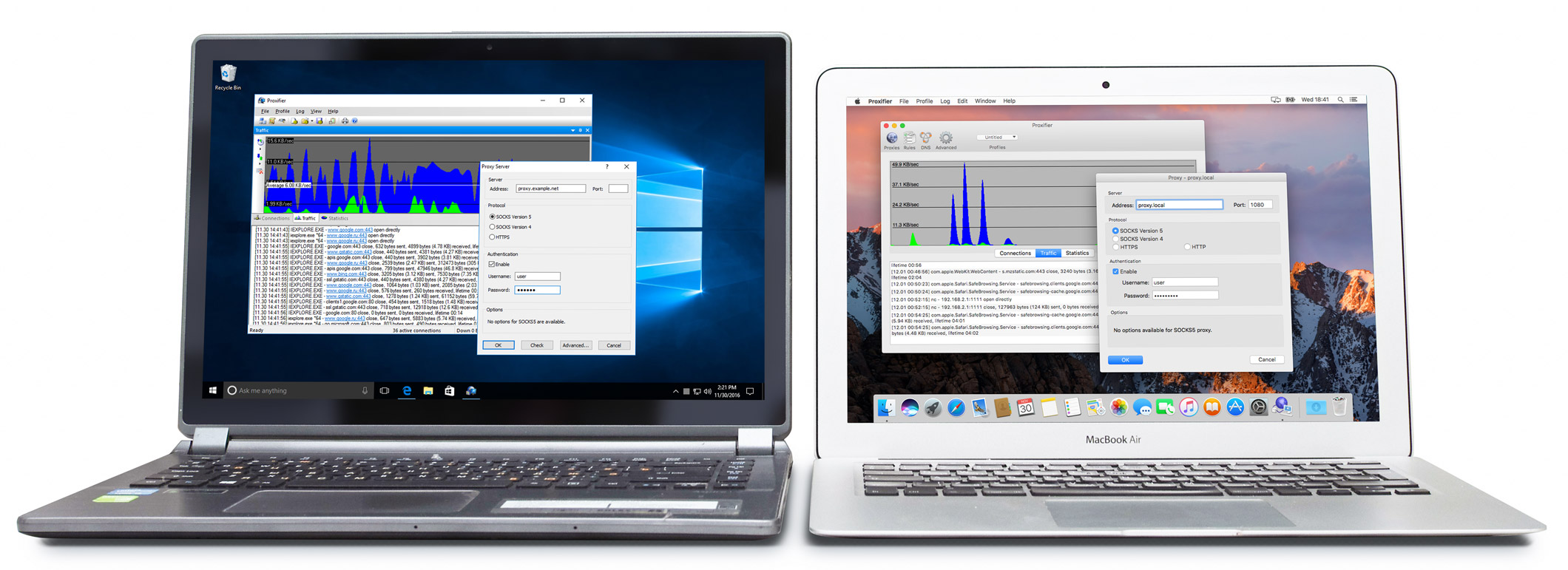
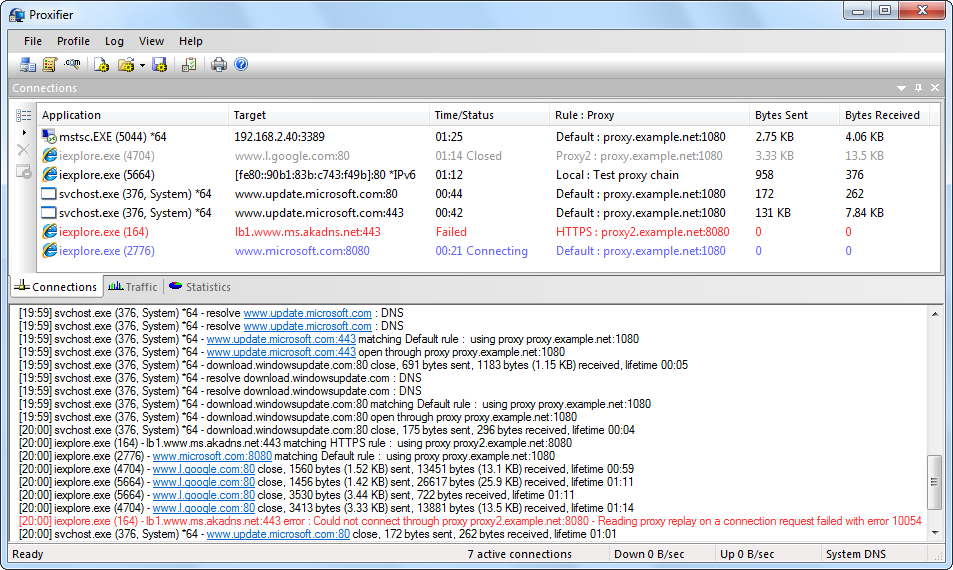
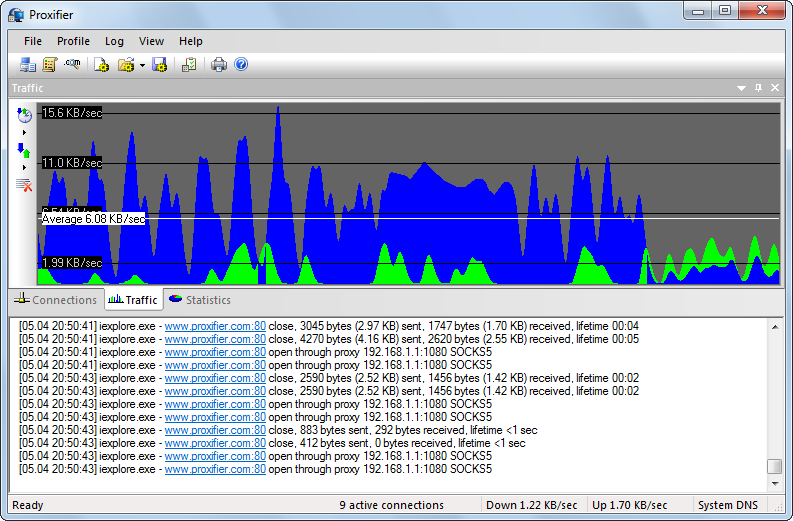
Redirect connections of any internet app (browser, email, database, game, etc.) through a proxy.

Control access to resources. Route all your connections through a single entry point. Update multiple configurations remotely from a single place.

Route internet traffic through faster routes.

Lightweight and flexible alternative to VPN. Tunnel your connections through encrypted channels.

Use a proxy as a gateway for your internet activities.

Assign different proxies or chains to different connections using the rule-based system.
Proxifier is always up to date with the latest OS versions of Windows, macOS and Android.
IPv6, HTTP(S), SOCKS, DNS via Proxy, Proxy Checker, NTLM, Windows Service, XML Config, Proxy Redundancy.
Native C++ app. No third-party dependencies. Installer size is 4 MB.
Transparent handling of connections on the system level. Best-in-class compatibility with third-party apps.
In a corporate network of 500 computers, Proxifier is deployed to forward connections through the proxy. The configuration gets managed remotely from a single control point.
A gamer from Asia has connectivity problems when playing on a US server. With Proxifier, he optimizes the routing with a chain of proxy servers.
A user needs to load-balance connections across multiple proxies. Proxifier can do this and also provide an automatic fallback if proxy is down.
Remote workers and road warriors use Proxifier as a lightweight alternative to VPN. Flexible rules allow tunneling of selected apps and targets.
A user needs to encrypt traffic for an app that does not support SSL. Proxifier forwards traffic though an SSH or SSL tunnel.
A support team needs to control the availability and performance of a service in multiple distant regions. With Proxifier, they easily switch between multiple proxies to simulate a local presence.
However, gamers should be wary of "too good to be true" deals on sites like Kinguin or G2A. While these platforms often sell keys for PC games, console keys found there are frequently purchased with stolen credit cards. If Nintendo detects a fraudulent purchase, they will revoke the license, and you will lose access to your Mario game without a refund.
Searching for these illicit keys is dangerous. license key mario
Nintendo also utilizes "Download Codes" or "eShop Cards." These are prepaid codes often given as gifts or included with special edition consoles. Entering this code into the eShop grants you the license to download the game. This is the only legitimate form of a "license key" for modern Mario titles. However, gamers should be wary of "too good
For decades, Nintendo has battled console emulation. While emulators themselves are often legal, the BIOS files and game ROMs required to play them are protected intellectual property. Searching for these illicit keys is dangerous
The "License Key Mario" concept represents a creative approach to software license key activation. While it may not be a widely recognized term, it offers insights into the world of software activation and the potential for innovative, engaging, and educational experiences. By exploring this concept, companies and developers can create unique and memorable interactions with their users.
With the advent of the Nintendo eShop, the concept of the "License Key" was born. When you buy a digital Mario title (like Super Mario Odyssey or Mario Kart 8 Deluxe ), you aren't buying the software itself in the traditional sense; you are purchasing a license to use that software. This license is tied to your Nintendo Account.
The conversation around Mario "keys" shifts slightly when discussing emulation and retro gaming.