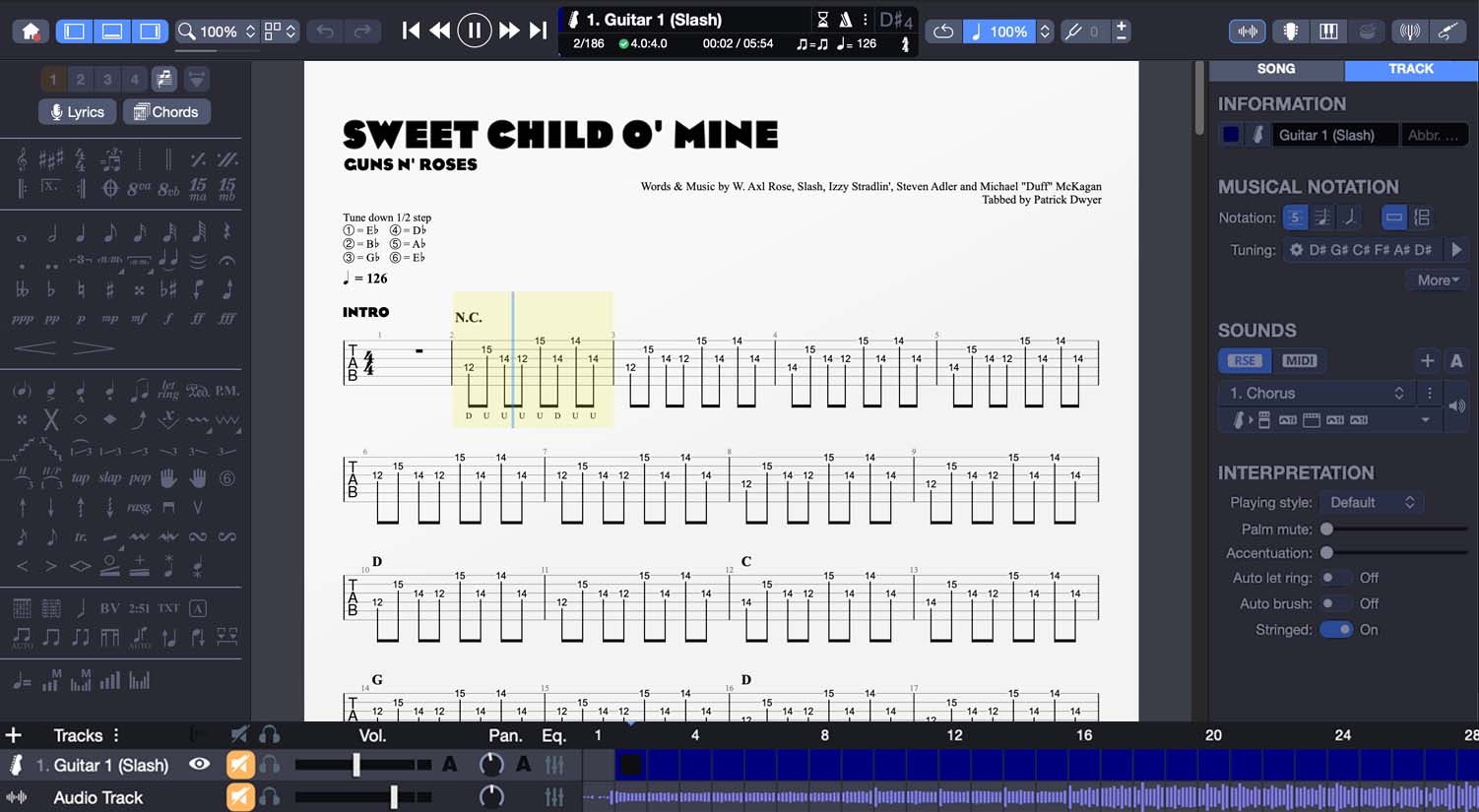
My weekly lesson package of backing tracks, tone screenshots and tab discounts is available for Patrons only.
JOIN NOW
| Activity | Frequency | Key Actions | |----------|-----------|--------------| | | Quarterly | Check enclosures for corrosion, seal integrity, and cable routing. | | Firmware Update | Semi‑annual or as released | Apply signed OTA updates; verify checksum before installation. | | Signal‑Quality Check | Monthly | Use the UI’s SNR Dashboard to spot degradation; re‑calibrate reference section if needed. | | Power System Test | Bi‑annual | Verify UPS runtime and solar‑panel charge controller functionality. | | Fiber Integrity Test | Annually or after major events | OTDR sweep to locate micro‑bends or macro‑breaks; replace faulty segments. |
: If "fsdss-120" refers to a product, it could be anything from electronic devices, machinery, to software. For instance, it might be a model of a device used in a specific industry, a product code for an electronic component, or a software version.
If you provide more information, I can assist you in creating a guide that includes: fsdss-120
The FSDSS‑120 distinguishes itself by delivering while embedding AI‑driven event classification at the edge, reducing bandwidth requirements and speeding up response times.
Published: April 2026
For detailed technical documentation, integration guides, or a live demonstration, contact the FSDSS‑120 sales and support team at .
The FSDSS-120 is used in a wide range of applications, including: | Activity | Frequency | Key Actions |
| Industry | Use‑Case | Benefits | |----------|----------|----------| | | Leak detection in offshore pipelines; monitoring of subsea risers | Early leak identification → reduced environmental impact and downtime | | Railway | Track‑bed strain monitoring; intrusion detection along right‑of‑way | Prevent catastrophic rail failures; improve safety | | Smart Cities | Structural health of bridges, tunnels, and high‑rise buildings | Continuous SHM → predictive maintenance, extended service life | | Power Transmission | Monitoring of overhead lines and underground cable bundles for temperature & mechanical stress | Avoid over‑loading, detect hot‑spots before failure | | Mining | Ground movement and rock burst detection in deep shafts | Worker safety, early warning for collapse | | Security | Perimeter surveillance for critical facilities (airports, data centers) | Detect digging, tunneling, or vehicular intrusion without cameras |
| Step | Recommendation | |------|----------------| | | Perform a site survey to minimize bends < 10°/m and avoid high‑temperature zones that could affect fiber attenuation. | | 2. Fiber Selection | Use single‑mode, low‑loss (G.652.D) fiber for distances > 80 km; consider armored or water‑blocking cable for harsh environments. | | 3. Connectorization | Utilize FC/APC or SC/APC connectors with polished end‑faces to reduce back‑scatter noise. | | 4. Splicing | Fusion splice with loss < 0.02 dB; keep splice points > 5 m apart to avoid cross‑talk. | | 5. Power Provisioning | Provide a dedicated 24 V DC supply with UPS backup; for remote sites, pair with solar panel and battery bank sized for at least 72 h autonomy. | | 6. Calibration | Run the built‑in Reference Section (10 m of known fiber) before commissioning; verify temperature and strain baselines. | | 7. Data Integration | Configure OPC‑UA endpoints for SCADA integration; map critical points (e.g., valve locations) to fiber coordinates. | | 8. Testing | Perform a Walk‑Through Test : inject a known vibration (e.g., hammer tap) at several points and confirm detection on the dashboard. | | 9. Documentation | Record fiber layout (GIS coordinates), splice maps, and configuration files for future maintenance. | | | Power System Test | Bi‑annual |